Leave Your Message
Finding the best Sofa Stores in 2026 requires more than browsing attractive showrooms. Buyers now compare comfort, delivery reliability, material quality, return policies, and digital service. A soft beige sofa may look perfect online. Its seat depth may feel completely wrong at home.
Market context matters. Statista’s Furniture market outlook places global furniture revenue at roughly US$766 billion in 2025. Its forecasts also identify online furniture retail as a continuing growth channel. The Business Research Company similarly reports sustained expansion in the global furniture market. However, these reports measure broad furniture categories, not only sofas. That distinction matters. A large market does not automatically reveal which local Sofa Stores offer better value.
Furniture industry analyst Jerry Epperson has said, “Furniture is a need-based purchase, but it is also an emotional purchase.” His observation explains why price alone cannot guide a reliable decision. Shoppers should inspect frame construction, foam density, fabric performance, warranty wording, and after-sales support. They should also test a sofa for several minutes, not several seconds.
This guide will compare practical signals across physical and online Sofa Stores. It will examine verified reviews, transparent pricing, customization choices, delivery records, and responsible sourcing claims. Some recommendations may remain imperfect. Retail policies change. Reviews can be selective. Even expert judgment has limits. Therefore, the strongest choice is not always the cheapest or most famous store. It is the retailer that clearly matches your room, budget, habits, and tolerance for risk.
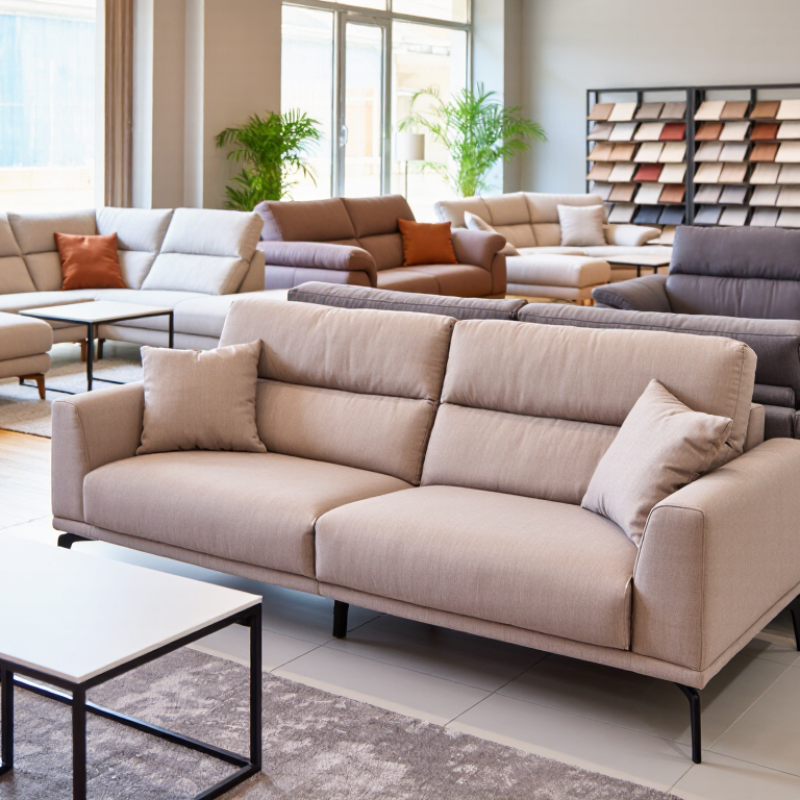
How to Find the Best Sofa Stores in 2026?
Finding the right sofa store starts with defining your needs, not browsing endless showrooms. Decide whether the sofa is for daily lounging, formal seating, guests, or family use. A household with children may need removable covers and stain-resistant fabric. Someone living alone may value a compact, deeper seat instead. According to Grand View Research’s 2024 Furniture Market Report, the global furniture market reached about $516.66 billion in 2023. That scale creates more choice, but also more confusion. I once chose a beautiful sofa that blocked a doorway. It looked perfect online. It was not practical.
Tips: Measure the room, doorway, lift, and staircase. Measure twice. Keep at least 30 inches for comfortable walking paths. Use masking tape to outline the sofa on your floor. Then compare seat depth, arm height, cushion firmness, frame construction, and warranty terms. Ask stores for material samples and written delivery policies. A reliable seller should answer clearly, not pressure you.
Style should support the room’s existing shapes and colors. A low-profile sofa can make a small room feel taller. Rounded arms can soften a space filled with sharp furniture. Set a complete budget before visiting stores, including delivery, assembly, protection plans, and possible fabric treatment. The 2024 Houzz & Home Study shows homeowners continue investing heavily in home improvements, yet many budgets remain limited. Do not spend every dollar on appearance. I still think comfort testing is underrated. Sit for ten minutes. Notice pressure behind your knees and lower back. Some choices need more reflection.
| Evaluation Dimension | What to Define Before Shopping | Useful Measurements or Benchmarks | What to Check at a Sofa Store |
|---|---|---|---|
| Primary Use | Decide whether the sofa is mainly for conversation, television viewing, reading, hosting guests, napping, or everyday family use. | Frequent lounging generally benefits from deeper seating, while formal entertaining often suits a more upright seat and firmer support. | Sit for at least 10 minutes, test several positions, and ask whether the cushions are designed for regular or occasional use. |
| Household Requirements | Consider the number of users, children, pets, accessibility needs, and whether overnight sleeping is required. | A sofa should provide enough seating without blocking movement. A sleeper sofa requires additional clearance when opened. | Check seat width, cushion stability, arm height, sleeper mechanism, removable covers, and ease of cleaning. |
| Room Size and Layout | Measure the room, wall length, doorways, elevators, stairways, windows, radiators, and walking routes. | Keep approximately 30–36 inches of main walking clearance where possible. Confirm the sofa fits through every access point. | Request the complete product dimensions, packaged dimensions, minimum doorway width, and delivery access requirements. |
| Sofa Size | Choose between a compact sofa, standard three-seat sofa, sectional, loveseat, modular sofa, or sofa bed. | Common sofa widths are roughly 60–96 inches, but actual dimensions vary significantly by design and arm thickness. | Compare overall width, depth, height, seat width, seat depth, leg height, and the proportions of each section. |
| Comfort and Ergonomics | Identify your preferred firmness, back height, seat depth, arm style, and support level. | Typical seat heights are about 17–19 inches, while seat depths often range from approximately 20–25 inches. | Check whether your feet rest comfortably on the floor, your lower back is supported, and the cushions return to shape after use. |
| Frame and Construction | Set priorities for durability, repairability, weight, flexibility, and expected service life. | A well-constructed frame should feel stable, with joints that do not visibly shift or creak during normal movement. | Ask about frame materials, joint construction, suspension system, cushion cores, replacement parts, and warranty coverage. |
| Upholstery and Maintenance | Match the fabric or leather type to sunlight, spills, pets, children, and cleaning habits. | Fabric performance can be compared using abrasion ratings, but higher ratings alone do not guarantee overall durability. | Request swatches, cleaning instructions, colorfastness information, stain-treatment details, and spare-cover availability. |
| Style and Visual Fit | Define preferred lines, colors, textures, leg styles, back profiles, and compatibility with existing furniture. | Neutral upholstery is generally easier to coordinate, while strong colors and patterns create a more dominant focal point. | Compare physical swatches in natural and artificial light, and evaluate the sofa from multiple viewing angles. |
| Budget Planning | Set a total budget that includes the sofa, delivery, assembly, taxes, protection plans, and possible disposal fees. | Compare sofas within the same size, material, construction level, and service package rather than comparing price alone. | Request a written total price and review deposits, financing costs, cancellation terms, return fees, and price adjustments. |
| Delivery and Installation | Determine the preferred delivery date and whether the sofa needs room-of-choice placement or assembly. | Lead times depend on inventory, customization, production, and delivery routes; made-to-order products usually require longer waits. | Confirm delivery windows, access checks, assembly responsibilities, packaging removal, damage procedures, and rescheduling charges. |
| Return and Warranty Policies | Decide how much protection you need if the sofa arrives damaged, feels uncomfortable, or does not suit the room. | Warranty terms commonly differ between frames, springs, mechanisms, cushions, upholstery, and workmanship. | Compare return windows, exclusions, restocking fees, inspection rules, repair options, and the process for submitting a claim. |